The head fake: sell the cut before you make it
A home drill for the head fake: dip a shoulder, hold one beat and cut the other way, so a defender leans the wrong way. No partner needed, and the puck comes later.
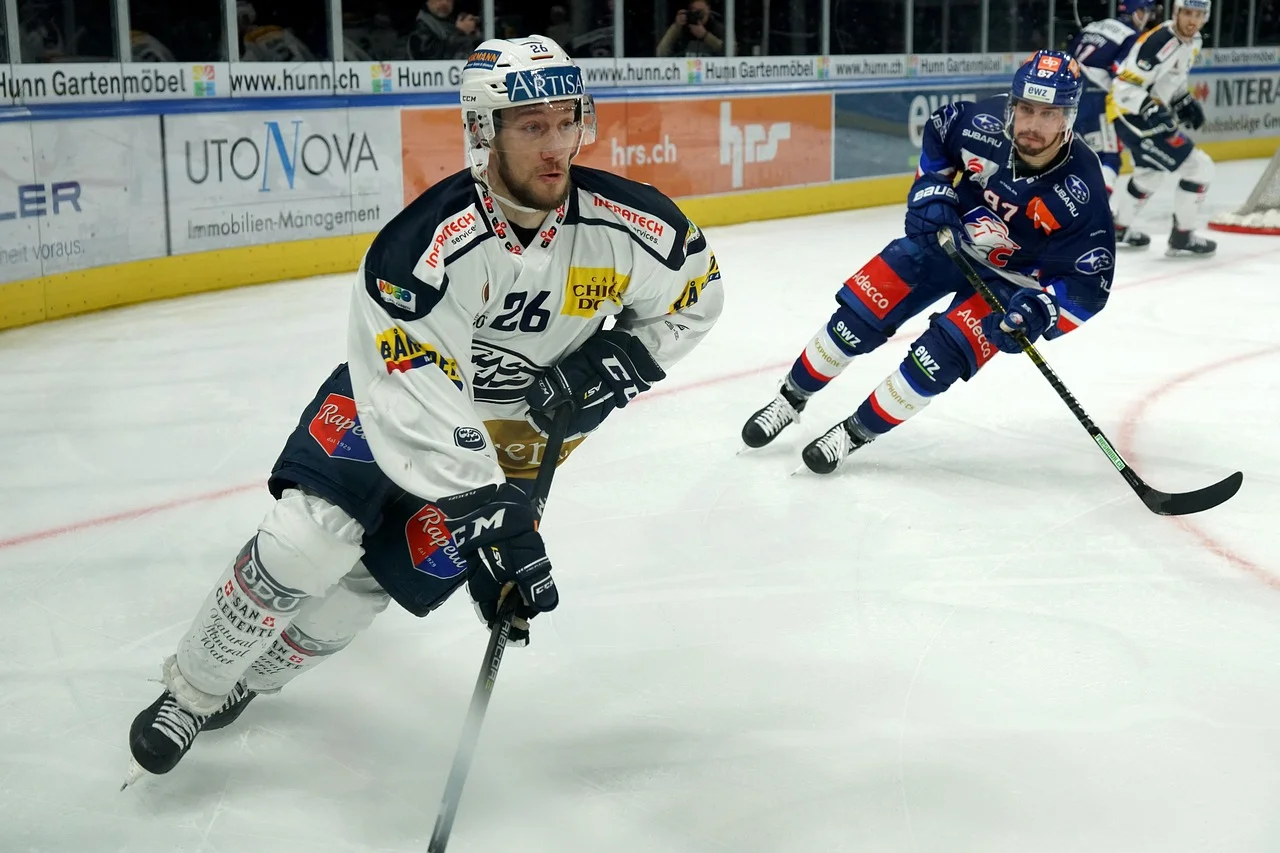
Many dekes fail before the cut. The defender is still square, the puck moves first, and there is no room to go anywhere. A head fake creates that room: the defender leans one way, and you go the other.
The move is not really in the hands. It is in the eyes, the shoulders and the first hard step. This drill teaches the fake on its own, without a puck and without a partner, so the body learns the sell before you add the puck.
Set up
You need two markers, a stick, a puck or ball, and a phone on a tripod. Put the markers 3 metres (10 feet) apart. Start about 4 metres (13 feet) back from the first marker, with enough room past it to take a few steps.
On a smooth floor, use a puck. On a driveway or rougher surface, use a ball or an outdoor puck.
How to do it
- Stand facing the first marker, knees bent, weight on the balls of your feet.
- Move toward the marker at half speed. Keep your eyes up, on a spot past the marker, not on your feet.
- About 1.5 metres (5 feet) away, dip your inside shoulder and turn your head and chest that way. Make it look like you are going there.
- Hold the lean for one beat and let the marker stand in for a defender who commits.
- Cut hard the other way and push off the outside edge of your outside foot.
- Take two or three quick steps past the marker, then slow down and circle back.
- Do 6 reps one way, then 6 the other way.
- Add the puck: carry it through the same path and keep it on the side away from the fake.
- Three rounds with a short rest between them is about 10 minutes.
Coaching points
- Sell it with your eyes first. A defender reads your face before your feet.
- Turn the shoulder, not only the head. A head that turns alone looks like a look, not a cut.
- One beat is enough. Hold the fake too long and you give the defender time to reset.
- Cut low. Stand tall through the cut and you lose the push from your edges.
- Keep the puck quiet during the fake. Move it late and sharply, after the defender leans.
- Practise both directions. Most players have a favourite side, and defenders learn it.
- Stop a round when the cuts get slow. Clean reps teach the body more than a high count.
Make it harder
- Start further back, about 6 metres (20 feet), and arrive at the marker with more speed.
- Put the markers closer together, 2 metres (6.5 feet), so the cut has to be sharper.
- Add a second fake: shoulder one way, then a quick head fake the other way before the cut.
- Have a parent or sibling stand still as a passive defender and react to the fake.
- Carry a ball on a rough surface, where a bad cut shows up faster.
- Finish each round with a shot or a pass against a wall, so the cut ends with a play.
Track it in PuckLab
Set the phone on the tripod so your whole path, your feet and the puck stay in frame. PuckLab counts touches per minute and keeps your streak, so you can see whether your cuts are getting quicker and your touches cleaner as the weeks add up.
Free play gives you 10 minutes a day, every game, and it resets daily. Pro is unlimited for each player. Detection runs on the phone on the tripod: no video is recorded or uploaded, and there are no ads in the game.
A fake is a promise. Make the defender believe it, then break it.