Backhand control: the side of the blade most players skip
A home drill for backhand control: roll the top hand, cup the puck on the blade, and build short, soft touches on the side many young players avoid. No partner needed.
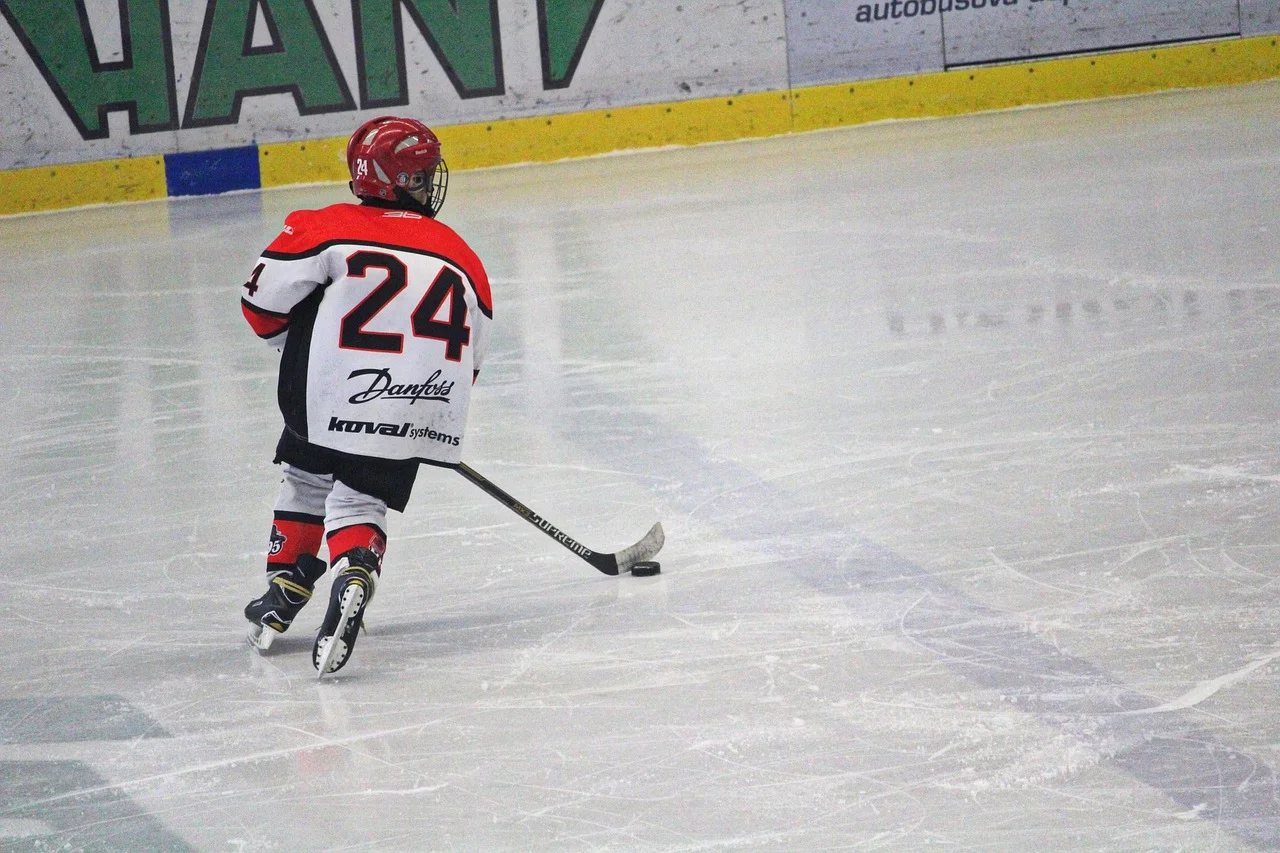
Most young players can move the puck quickly on the forehand. Put it on the backhand and the hands slow down, the blade opens, and the puck rolls off. That is normal. The backhand uses a different wrist roll and different small muscles, so it only improves when it gets its own reps.
This drill gives the backhand ten focused minutes at home. No partner, a small space, and short touches that teach the blade to cup the puck instead of hitting it.
Set up
You need a stick, a puck or ball, two markers and a phone on a tripod. Mark a box 2 metres by 2 metres (6.5 feet by 6.5 feet) and put the markers about 1 metre (3 feet) apart.
On a smooth floor, use a puck. On a driveway or rougher surface, use a ball or an outdoor puck.
How to do it
- Stand with the puck on your backhand side, feet shoulder width apart, knees bent.
- Roll your top hand so the blade closes over the puck. The blade should cup it, not lie flat.
- Pull the puck toward your back foot with a short, soft touch. Keep it within about 30 cm (1 foot) of the blade.
- Push it back out toward the marker with the same cupped blade.
- Do 20 slow touches. Slow enough that the puck stays flat on the blade.
- Then move the puck side to side on the backhand only, between the two markers, for 20 touches.
- Finish with 10 backhand toe pulls: roll the toe of the blade over the puck and pull it behind your back foot.
- Do three rounds. With setup, that is about 10 minutes.
Coaching points
- The top hand does the rolling. The bottom hand only guides.
- Cup the puck. If the blade is flat, the puck will bounce away.
- Soft hands. If you hear the puck slap the floor, you are hitting it, not carrying it.
- Keep the puck inside the width of your body. Reaching out with straight arms makes the blade open.
- Eyes up between touches. Pick a spot on the wall at eye level and look at it after every few touches.
- Stay low. Straight legs make the backhand blade roll open.
- Work both directions: pull the puck toward you, then push it away.
- Stop a round when the touches get sloppy. Clean reps teach the hands more than a high count.
Make it harder
- Widen the markers to 1.5 metres (5 feet) so the reach is longer.
- Take the bottom hand off for 10 seconds in each round.
- Add a backhand toe drag at the end of every round.
- Have a parent or sibling call “left” or “right” while you keep your eyes up.
- Use a golf ball for a few touches to feel the blade roll.
- Mix the rhythm: one forehand touch, then two backhand touches.
Track it in PuckLab
Set your phone on the tripod so the whole box and the puck stay in frame. PuckLab counts touches per minute and keeps your streak, so you can see whether your backhand touches are getting quicker without the puck rolling off the blade.
Free play gives you 10 minutes a day, every game, and it resets daily. Pro is unlimited for each player. Detection runs on the phone: no video is recorded or uploaded, and there are no ads in the game.
The backhand is not a weaker forehand. It is its own skill, and it responds to its own ten minutes.