Set up a practice space at home that works
How to build a ten minute practice space at home: the floor, a puck or ball, the gear that earns its place (tiles, shooting pad, tripod, rebounder, storage), where to buy it, and where to put the Recorder phone. For parents setting up a first session.
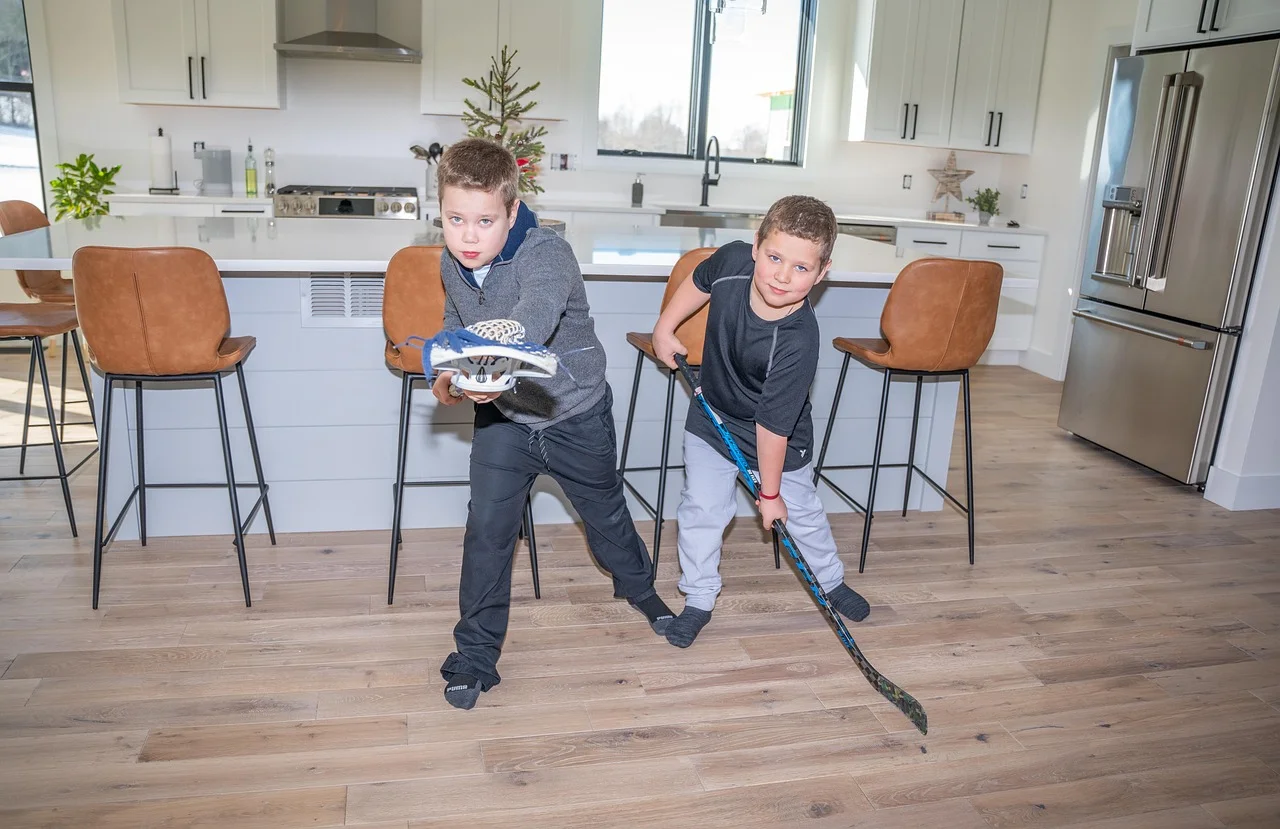
Most home practice spaces fail for the same reason: they take too long to set up. If the tiles are stacked in the garage and the tripod is in a closet, the ten minutes you meant to use are gone before you start. The fix is a small space that stays ready.
You do not need a rink. You need a clear patch of floor, a puck or a ball, and a way to see your hands. Everything else is optional.
Start with the space
Pick a spot you walk past every day. A basement, a garage, a spare room, or a driveway all work. Look for three things:
- A smooth, clear floor.
- A wall or backstop that can take a stray puck.
- Enough light to see the puck, and enough room to stand back from the camera.
Mark the practice area with tape or two pucks. A small boundary makes the space feel like a rink and keeps pucks from wandering under the car.
The three things that matter
- A surface that lets the puck slide.
- A puck or ball that matches the surface.
- A camera view that shows your hands.
Everything else, rebounds, targets, extra pucks, is a bonus. Buy it when it fixes a problem you have, not before.
Gear that earns its space
Surface. Modular synthetic ice tiles give a puck a smoother glide than bare concrete and let you build a small sheet in a basement, garage, or spare room. A shooting pad is the smaller option and easier to put away. A smooth, clean floor works too, especially for ball work.
Puck or ball. A Green Biscuit is built for off-ice stickhandling on rough surfaces, so it slides instead of catching on concrete. A XenoPuck is another off-ice option. A wooden ball or a hockey ball also works on a smooth floor. Each one suits a different surface, so check the maker’s guidance before you buy.
Camera. A tripod with a phone or tablet holder keeps the Recorder steady and at the same height every session. A stack of books works once, but it moves.
Rebounder. A wall-mounted or freestanding rebounder turns a wall into a passing partner. A concrete wall and a ball do the same job for free.
Storage. A bin for pucks and a hook for the tripod keep the space easy to use. Gear that lives in a pile does not get used.
A small-space setup
A 4 by 6 foot patch of modular tiles is enough for stickhandling and figure-eights. Put it against a wall so pucks stay close. Add a rebounder if you want passing reps, or use the wall and a ball.
Start with one drill. Figure-eights around two pucks work the hands and force you to keep your head up. Toe drags work the edges of the puck. Eyes-up stickhandling with a ball works anywhere.
A driveway or garage setup
Concrete is hard on a puck. A Green Biscuit is made for rough surfaces, so it slides instead of catching. A hockey ball is the low-cost option for outdoor work. Add a net or a backstop behind the shooting area, and keep the space clear of cars and windows.
Point the camera at your hands
A tripod with a phone or tablet holder, set at chest height and angled slightly down, gives a steady view of the hands. Put the light in front of you, not behind you. A window behind the phone will turn your hands into a silhouette.
The Pucklab Recorder is your phone on the tripod. Puck detection runs on the phone. No video is recorded or uploaded. You can set it up in a basement or garage without worrying about where the footage goes.
Clear the edges
Sticks, bags, nets and chairs at the edge of the frame become things the puck hits and things the camera watches instead of the player. Move them out before the session.
Make it a habit
Ten minutes a day is enough to build the habit. Free play is 10 minutes a day, every game, and it resets daily. Pro is unlimited for each player. Free play is not a trial and it does not end. Parents hold the account and each child has an anonymized profile in it. There are no ads in the game.
Keep the space ready. Put the puck in the same spot. Leave the tripod set up if you can. The fewer steps between you and the first touch, the more likely the space gets used.
What to skip
Do not buy a full synthetic rink before you know the space gets used. Do not buy a shooting machine for a ten-minute habit. Start with a puck and a smooth floor. Add gear only when it fixes a problem you actually have.
Where to buy
You can find these at HockeyShot, Pure Hockey, Amazon, or your local hockey shop. Search by the names above.
[affiliate link: modular synthetic ice tiles] [affiliate link: shooting pad] [affiliate link: Green Biscuit] [affiliate link: XenoPuck] [affiliate link: rebounder] [affiliate link: tripod with phone or tablet holder]
Until Pucklab has its own storefront, these links are how we point you to the gear above. Some links on this page are affiliate links. If you buy through them, Pucklab may earn a commission at no extra cost to you.
Track it in PuckLab
Set the phone on the tripod, pick a game, and play. The Recorder reports touches per minute and keeps the streak, which is why the same setup matters: a smaller box or a slower ball changes the number, and you want to compare like with like.
Puck detection runs on the phone. No video is recorded or uploaded.
Start with a simple drill, like figure-eights around two pucks: https://www.pucklab.ca/learn/figure-eights/